Tsinghua University's School of Economics and Management (Tsinghua SEM) held a series of future technology-themed events on March 21 as part of its "Beyond Now" open day, attracting innovative minds from China and abroad.
During the Global Economic Restructuring and Innovation forum, one of the events, the St. Gallen-Tsinghua SEM Global Enterprise Excellence Programme (GEE) was launched. Participants in the forum, which was moderated by Professor Xue Jian, Tsinghua SEM's Party committee secretary, discussed how to help Chinese enterprises reach the top rank in the world at a time of global economic tectonic shifts and geopolitical tensions.
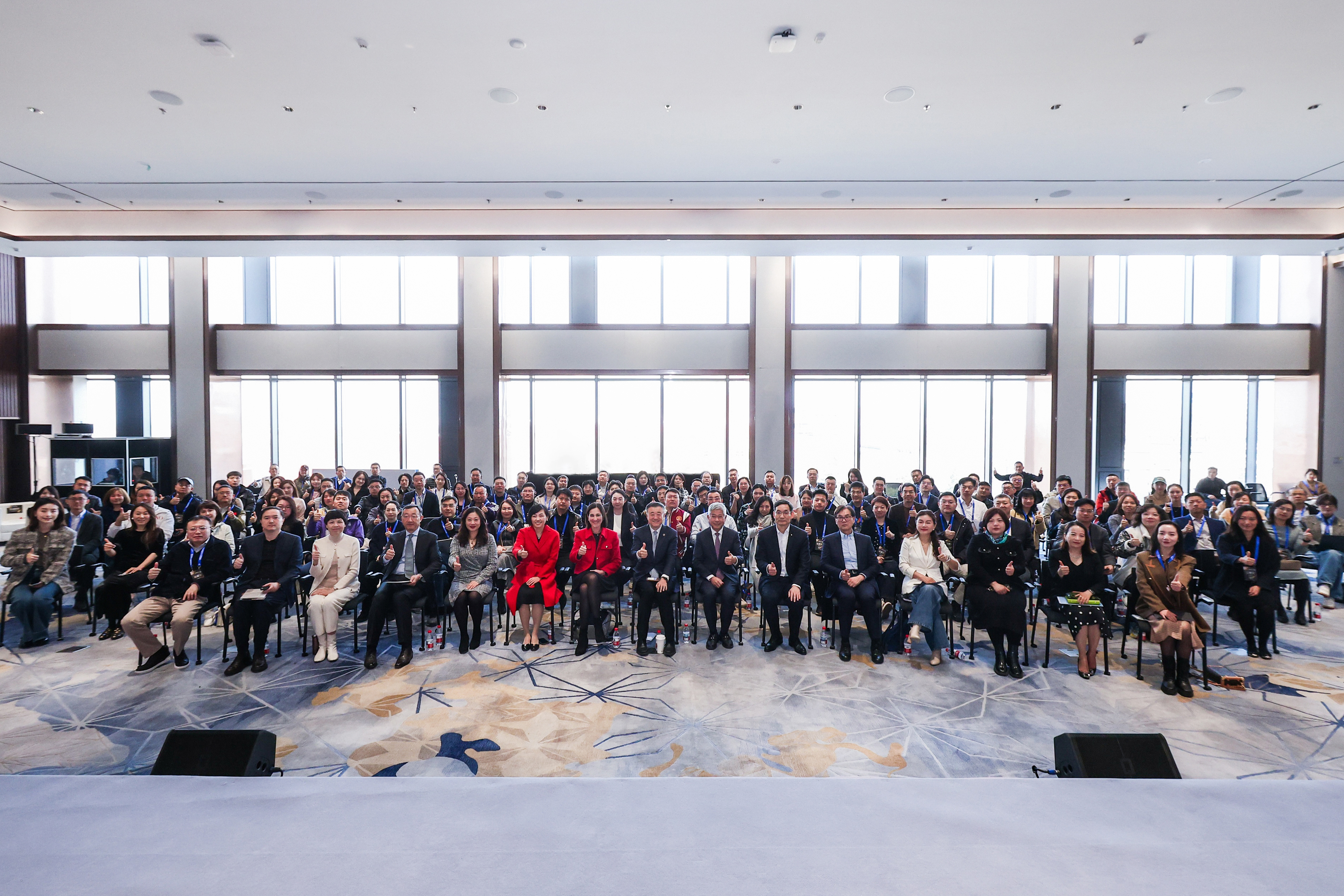
All the participants in the forum.
In his opening remarks, Professor Yang Bin, vice chancellor of the Tsinghua University Council, pointed out that global economic restructuring has been accelerating. For Chinese enterprises that are striving to rise to the top rank on the world stage, this situation presents unprecedented opportunities, but the complicated international environment poses enormous challenges. He said he hoped that the two sides would work closely to equip entrepreneurs with a global vision and strategic thinking.
Professor Bai Chong-En, dean of Tsinghua SEM, elaborated on the importance of developing world-class enterprises. He said that it is strategically important to build world-class Chinese enterprises because this will enhance these companies' global competitiveness, increase their operational resilience, and strengthen China's national competitiveness. He pointed out that for Chinese companies, going global is about expanding production capacity and market, but also features a systematic process involving cross-border capital allocation, knowledge acquisition, and talent management. Against the backdrop of the complicated geopolitical environment, he added, Chinese companies should fully integrate into the ecological networks of host countries, build communities of interest for value chains, and avoid repeating harmful cut-throat competition in other countries.
In her remarks, Professor Karolin Frankenberger, dean of the Executive School of the University of St. Gallen, said that China and German-speaking economic areas have deep-rooted relationships, and their advantages are complementary. Switzerland has occupied first place in the Global Innovation Index for 14 consecutive years, Germany remains the biggest economy in the EU, and Austria links the ecosystems of Central and Eastern Europe. She said she believed that the St. Gallen-Tsinghua SEM joint program would fully engage Chinese and European entrepreneurs, allow peer-to-peer discussions and interdisciplinary communications, and enable a joint exploration of a growth pathway for top international enterprises.
Zhou Yuxian, China National Building Material Group's Party committee secretary and chairman, outlined the evolutionary trajectory of the advanced materials industry, and the exploration process that his company went through. He said that the 0-to-1 stage involves enhancing the integration of supply and demand and establishing your enterprise as the major enabler of innovation; from 1 to 100, you need to drive innovation and investment simultaneously and facilitate the process of turning technology into products; and from 100 to N, you need to further blend the organic and inorganic growth models and accelerate quality-driven transformation. Zhou used multiple examples to show how China National Building Material Group emulated its world-class peers and finally made breakthroughs.
James Zhan, chairman of the World Investment Conference, analyzed the current global economic and trade situations and predicted a new trend in future industrial development, based on the changes that cross-border investment and the international production system have experienced. Drawing from thorough research that he undertook during his tenure at the United Nations and other international institutions, and from the perspectives of technological revolutions and geopolitics, he gave an in-depth analysis of the role transformation and strategic options that all international companies will face in the future as the world undergoes industrial restructuring. His speech provided valuable insights for Chinese companies planning to expand into overseas markets.
After the speeches, Bai Chong-En moderated a panel discussion featuring Karolin Frankenberger, Zhou Yuxian, James Zhan, and Zhang Jianhui, vice president of Xiaomi Group, who graduated from Tsinghua SEM's "Future Tech, Future Thinking" program.
The participants exchanged views on how Chinese companies should achieve a world-class rank against the backdrop of global economic restructuring. They offered profound insights as to academic theory, industry practice, international rules, corporate governance, and others, providing the audience with rich food for thought.
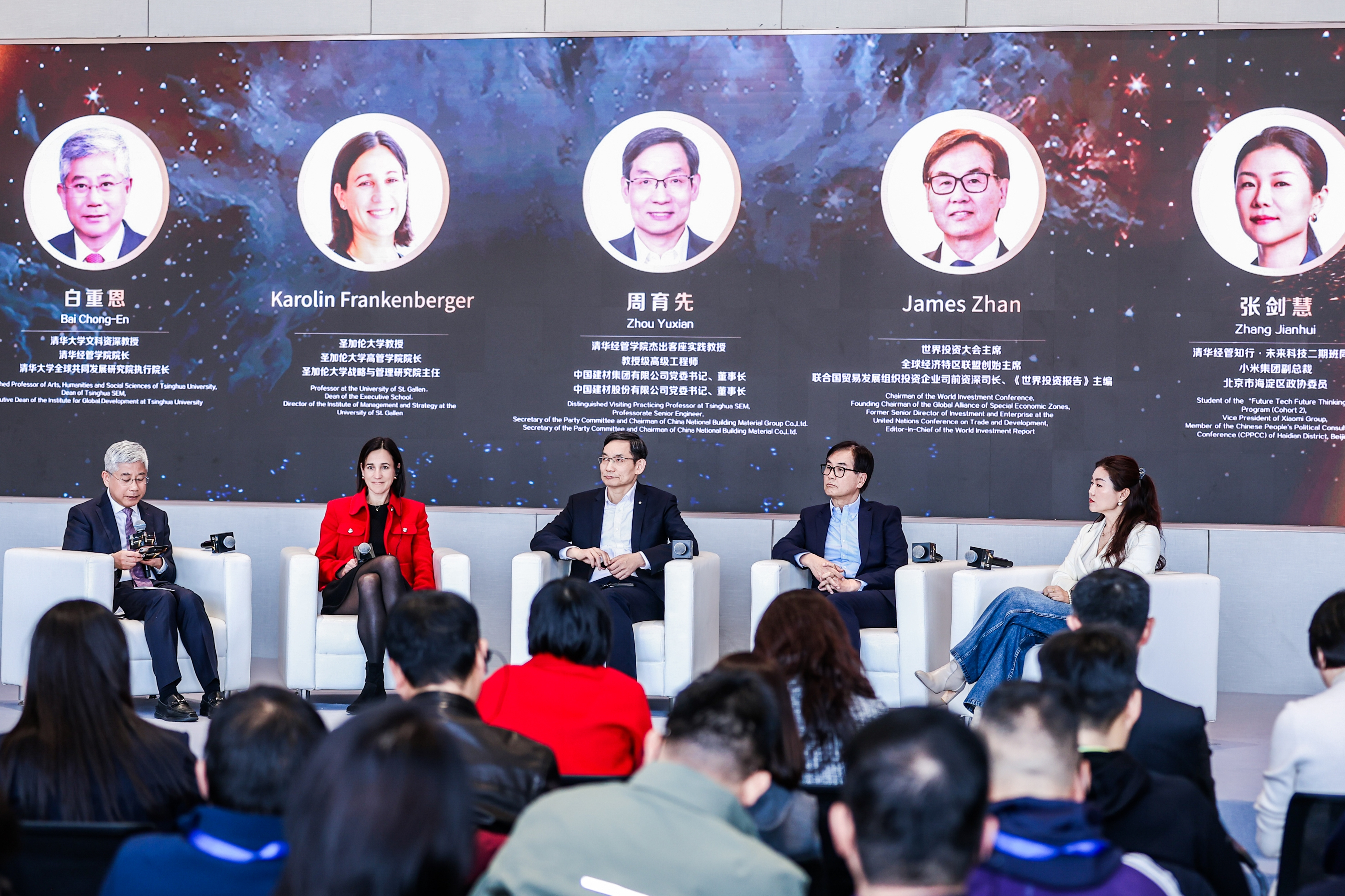
The participants in the panel discussion.
In a ceremony, Yang Bin, Bai Chong-En, Karolin Frankenberger, Xue Jian, Zhou Yuxian, James Zhan, the Tsinghua SEM EMBA Programs' director Zhuang Li, Mercedes-Benz Group's chief strategy officer Paul Gao, and Zhang Jianhui launched the St. Gallen-Tsinghua SEM Global Enterprise Excellence Programme.
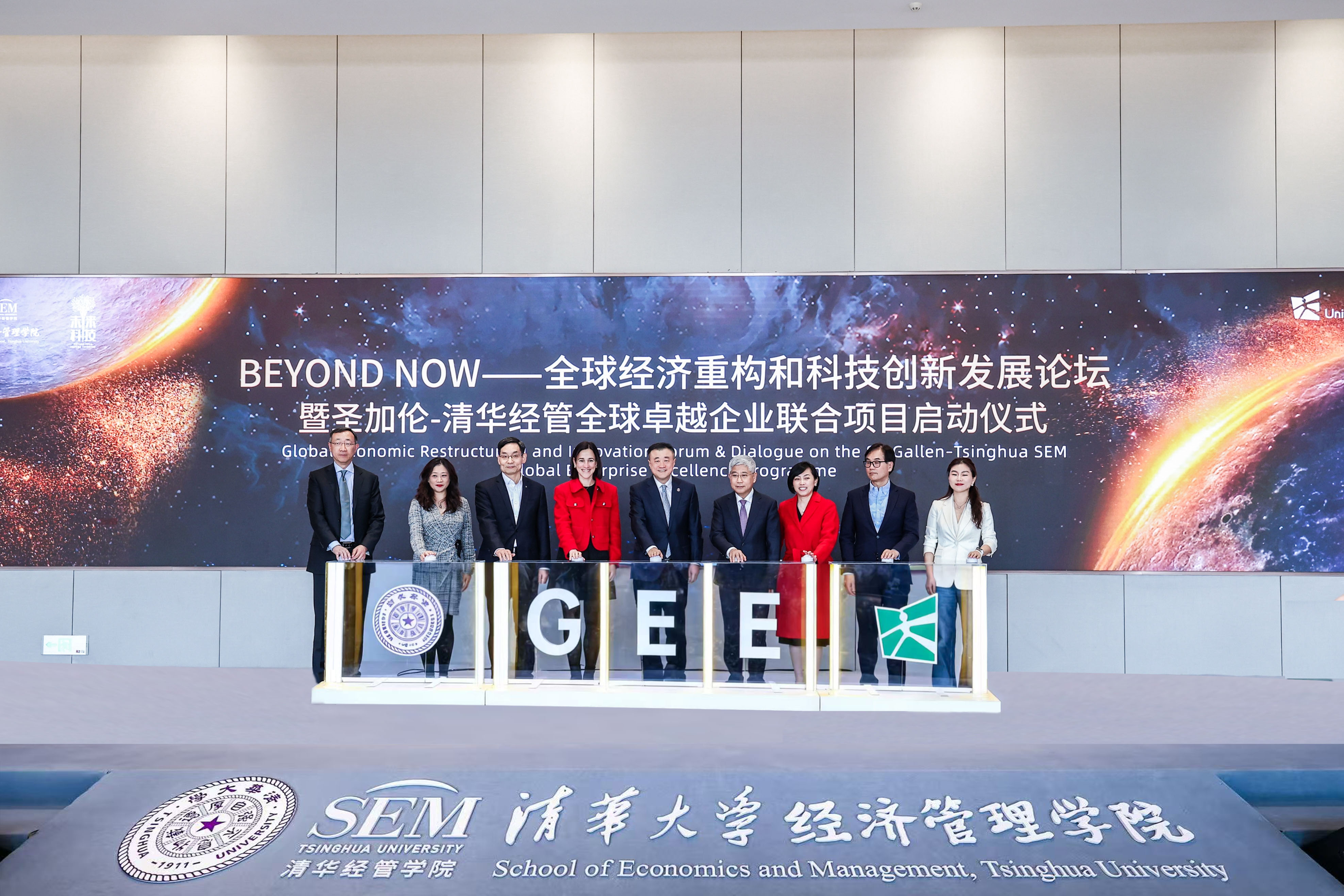
The St. Gallen-Tsinghua SEM Global Enterprise Excellence Programme is launched.
Knowledge and practice are complementary and can enhance each other. Tsinghua SEM's open day events provided a platform for scholars, industry practitioners, and innovators to exchange views, and discuss how to further facilitate technology to empower industry and serve China's national strategy. The "Future Tech, Future Thinking" program will stay focused on frontier technology and innovation, and strive to lead China's technological revolutions and industrial transformation. Tsinghua SEM will work with experts from various areas to build a better tomorrow.
Source: EMBA Programs
Editor: Ren Zhongxi

 Latest News